
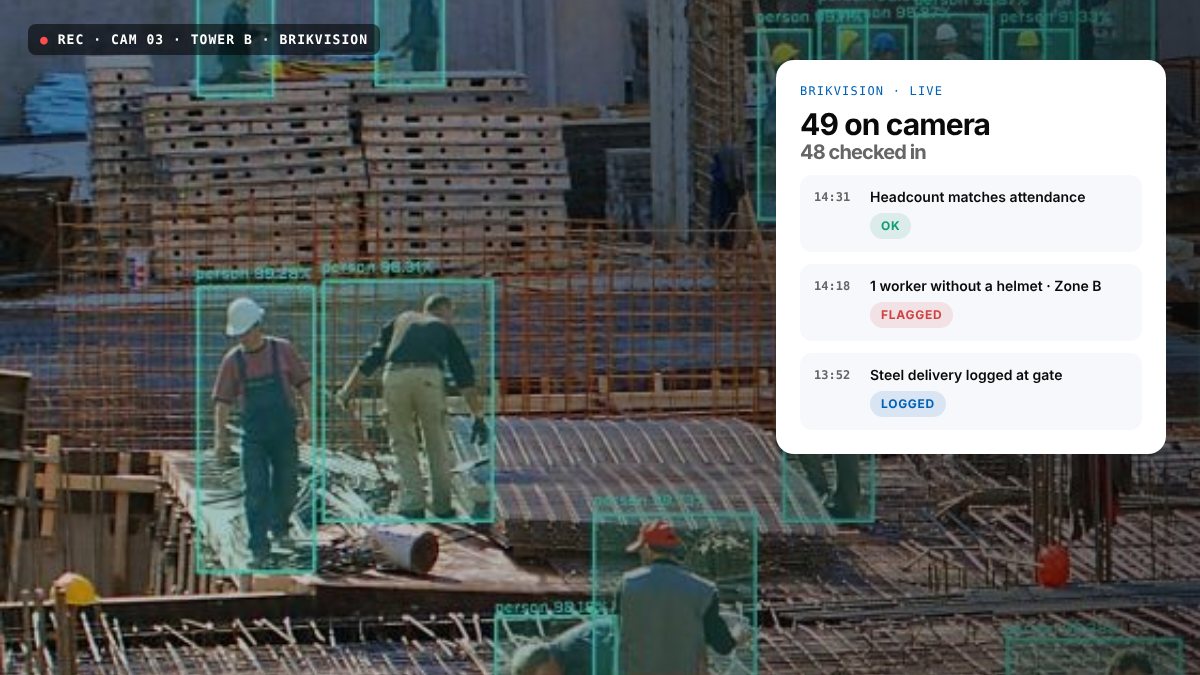
The short answer: AI CCTV for construction sites uses computer vision to analyse the feeds from site cameras and turn them into numbers and alerts instead of hours of footage: live headcount by zone, logs of deliveries at the gate, missing helmets and vests, people in restricted zones and which work areas are active. Good systems send each alert with the camera, time and frame as proof, and a person reviews it before anything is reported against a worker or contractor. BrikVision is Brikito's AI CCTV for construction sites.
Most construction sites already have cameras. They record all day, every day, and the footage is only opened after something goes wrong: a theft, an accident, a dispute over a delivery or a labour bill. Then someone spends an afternoon scrubbing through video looking for a few seconds that matter.
AI changes what cameras are for. Instead of a recording to search later, the camera becomes a sensor that tells the project team, as things happen, how many people are on site, what arrived at the gate and where a safety gap has opened. This guide explains how AI CCTV and computer vision work on construction sites, what they can and can't do, and how to introduce them responsibly.
What is AI CCTV monitoring for construction?
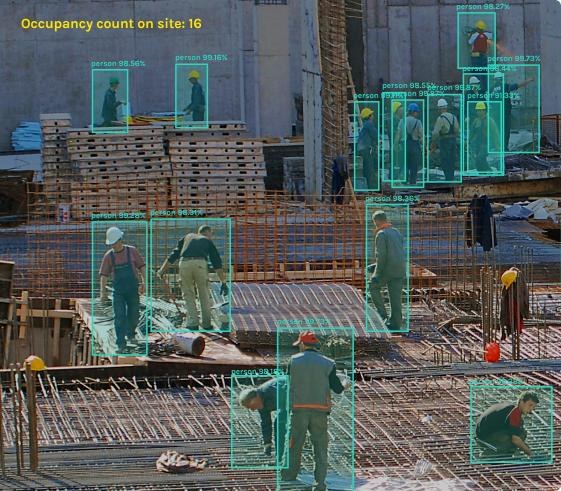
AI CCTV monitoring is software that applies computer vision, a type of AI that recognises objects and people in images, to live camera feeds. On a construction site it typically detects:
- People: counts by zone and by hour.
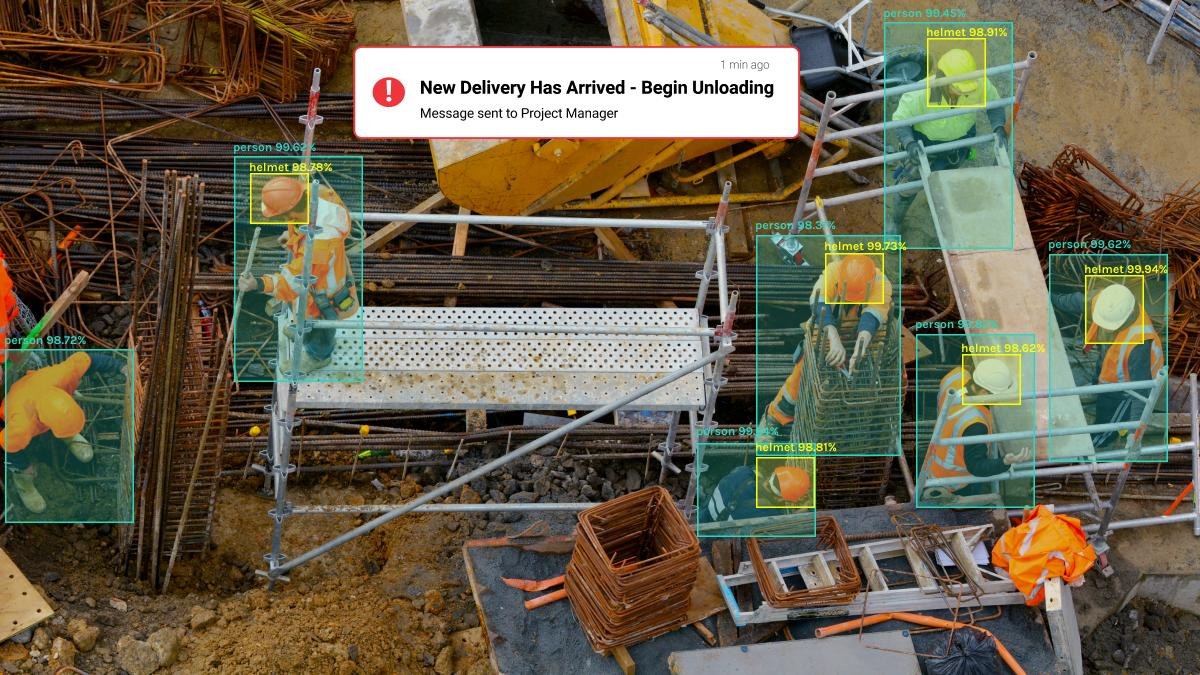
- PPE: whether workers are wearing helmets and high-visibility vests.
- Restricted zones: people entering areas marked as off-limits, such as under a crane lift or near an open edge.
- Vehicles and deliveries: trucks entering and leaving the gate, with the time logged.
- Activity: which work zones are active and how visible work is progressing.
Why construction sites need AI on their cameras
- Nobody has time to watch footage. A site with four cameras records nearly 100 hours of video a day.
- Site visits just to check. Developers and PMs drive across the city to confirm whether crews are working and slabs are progressing.
- Headcounts that don't add up. The register says 48. The contractor bills for 52. Without independent evidence, the bill gets negotiated.
- Safety gaps happen in minutes. A missing helmet or a removed edge barrier is only useful to know about while it is happening.
- Delivery disputes. Did the steel arrive on Tuesday or Wednesday? How many trucks came in? Gate logs settle it.
Six things AI CCTV can do on a construction site
| Use | What it does | Who benefits |
|---|---|---|
| Live headcount | Counts people per site and zone, hour by hour, and compares with attendance and contractor bills | PM, accounts, developer |
| Deliveries and material movement | Logs gate entries and exits and links deliveries to the record | Stores, purchase |
| PPE and safety checks | Detects missing helmets and vests and people in restricted zones; sends the frame to the safety lead | Safety officer, PM |
| Progress monitoring | Shows which zones are active and how visible work is moving | PM, developer |
| Photo quality checks | Checks site photos posted in chat for quality and PPE issues | QA/QC, safety |
| Multi-site view | Every site on one screen, with searchable events | Developer, owner |
How AI CCTV is set up on a construction site
- Connect existing cameras. In most cases no new cameras are needed. Coverage of the gate, work zones and stores is checked.
- Mark zones. Define work zones, restricted areas and the gate, and decide who receives which alert.
- The AI watches continuously. Every feed is analysed for people, PPE, deliveries and activity.
- Answers, not footage. Counts, logs and alerts reach the team's chat and dashboard, each with the frame as proof.
Camera placement matters. A camera pointed at the sky or blocked by formwork can't see much, so expect to adjust positions after the first week.
AI CCTV for construction safety
Falls are the leading cause of construction deaths in many countries, and many serious incidents start with a gap that existed for minutes or hours: an open edge, a missing harness, a worker inside an exclusion zone. AI CCTV helps by spotting some of these gaps while they are happening and sending them, with the frame, to the person who can fix them.
It supports safety; it does not replace it. Permits, training, supervision, toolbox talks and physical controls such as edge protection still do the real work. Our site safety and quality guide covers the full system.
AI headcount and labour bills
When camera headcount by the hour sits next to attendance records, month-end labour bills become something you check rather than negotiate. If the contractor bills for 52 workers on a day when the cameras saw 49 and attendance shows 48, you have specific evidence to discuss. See our labour management guide for how to reconcile attendance with bills.
What AI CCTV can't do (yet)
- See what cameras can't. Work inside rooms, behind formwork or at night with poor lighting may not be visible.
- Measure quantities precisely. It shows activity and visible progress; measured quantities still come from the site team.
- Be perfect. Detections can be wrong. That is why every alert should carry the frame and be reviewed by a person.
- Replace supervision. It tells you where to look; people still decide what to do.
Using AI cameras responsibly
- Tell workers and contractors what the cameras monitor and why.
- Monitor the site, not the person. Focus on counts, PPE, zones and deliveries.
- Review before reporting. Nothing should be reported against a worker or contractor until a person has reviewed the evidence.
- Limit access by role and agree how long footage and events are kept.
- Follow local law on video surveillance and data protection in each country you work in.
BrikVision: AI on your existing site CCTV
BrikVision adds AI to the cameras you already have. It counts people by zone and hour, logs deliveries at the gate, detects missing helmets and vests and people in restricted zones, and shows which zones are active. Alerts arrive in BrikChat with the frame attached, and anyone can ask Brik "how many are on site right now?" and get a number with proof. Brik flags; a person decides, and nothing is reported against a worker or contractor until a person has reviewed the evidence.
BrikVision is part of Brikito's Enterprise plan, and pilots are available on request. Learn more on the BrikVision page, or see how it works with AI site chat and the wider AI construction management platform.
Frequently asked questions
What is AI CCTV monitoring for construction sites?
It is software that analyses site camera feeds with computer vision to count people, log deliveries, check PPE and show active work zones, sending numbers and alerts instead of footage.
Do I need new cameras for AI CCTV?
Usually not. Most AI CCTV systems, including BrikVision, connect to existing site cameras. Coverage of the gate, work zones and stores is checked during setup.
Can AI detect missing helmets on a construction site?
Yes. Computer vision can detect whether workers are wearing helmets and high-visibility vests and flag people in restricted zones, sending the frame to the safety lead.
How accurate is AI headcount from CCTV?
Accuracy depends on camera position, lighting and how much of the site is visible. Use camera headcount as independent evidence alongside attendance, and review the frames when the numbers disagree.
Is AI CCTV legal on construction sites?
Video monitoring of workplaces is subject to local law, which varies by country. Inform workers, limit use to site management and safety purposes, restrict access by role and take local advice on data protection.
Is BrikVision available now?
BrikVision is part of Brikito's Enterprise plan, with pilots available on request. Contact the Brikito team to scope a pilot on one site.
Answers, not footage
Construction sites don't need more cameras. They need the cameras they have to start telling people what is happening, while it is happening. AI CCTV does that when it is set up with clear zones, sends evidence with every alert and keeps a person in charge of every decision.